Becoming a pilot requires a massive financial commitment. The high cost of tuition stops many talented residents from pursuing their goals. If you want to fly, you need a solid funding strategy. Ready to start? Contact Caribbean Air Academy at (470) 309-4091 to discuss your options.
Finding the right flight school Nassau, Bahamas makes all the difference in your career. Aviation training provides a definitive return on investment. Commercial pilots earn excellent salaries, and airlines desperately require new talent. You just need to map out your funding pathways first.
Our instructors typically find that students who plan their finances early finish their training much faster. You have plenty of options to bridge the financial gap. Let us look at how you can fund your aviation career using scholarships, loans, and smart planning.
What Are the Best Aviation Scholarships Available?
The best aviation scholarships come from national organizations, regional grants, and specialized groups. Associations like Women in Aviation and the EAA offer awards ranging from $1,000 to $10,000. Apply for these funds early to offset your tuition costs without taking on debt. Finding local scholarships requires research, but the effort pays off.
National and Regional Opportunities
Start your search with large national organizations. The Aircraft Owners and Pilots Association (AOPA) and the Ninety-Nines give out millions of dollars annually to aspiring pilots. You can also find regional opportunities specific to your area.
How to Apply and Stand Out
You need to treat scholarship applications like a part-time job. Research every requirement and submit your paperwork weeks before the deadline. Write a compelling essay that highlights your dedication to aviation. Committees want to fund students who show genuine passion and a clear career path. Have a flight instructor review your application to ensure it looks professional.
How Do Flight School Loans Work?
Flight school loans work by bridging the gap between your savings and your total training costs. Private aviation loans and personal lines of credit offer borrowing limits up to $100,000. Interest rates typically range from 5% to 15%, depending on your credit score and the specific terms you select.
Understanding Flight Training Costs
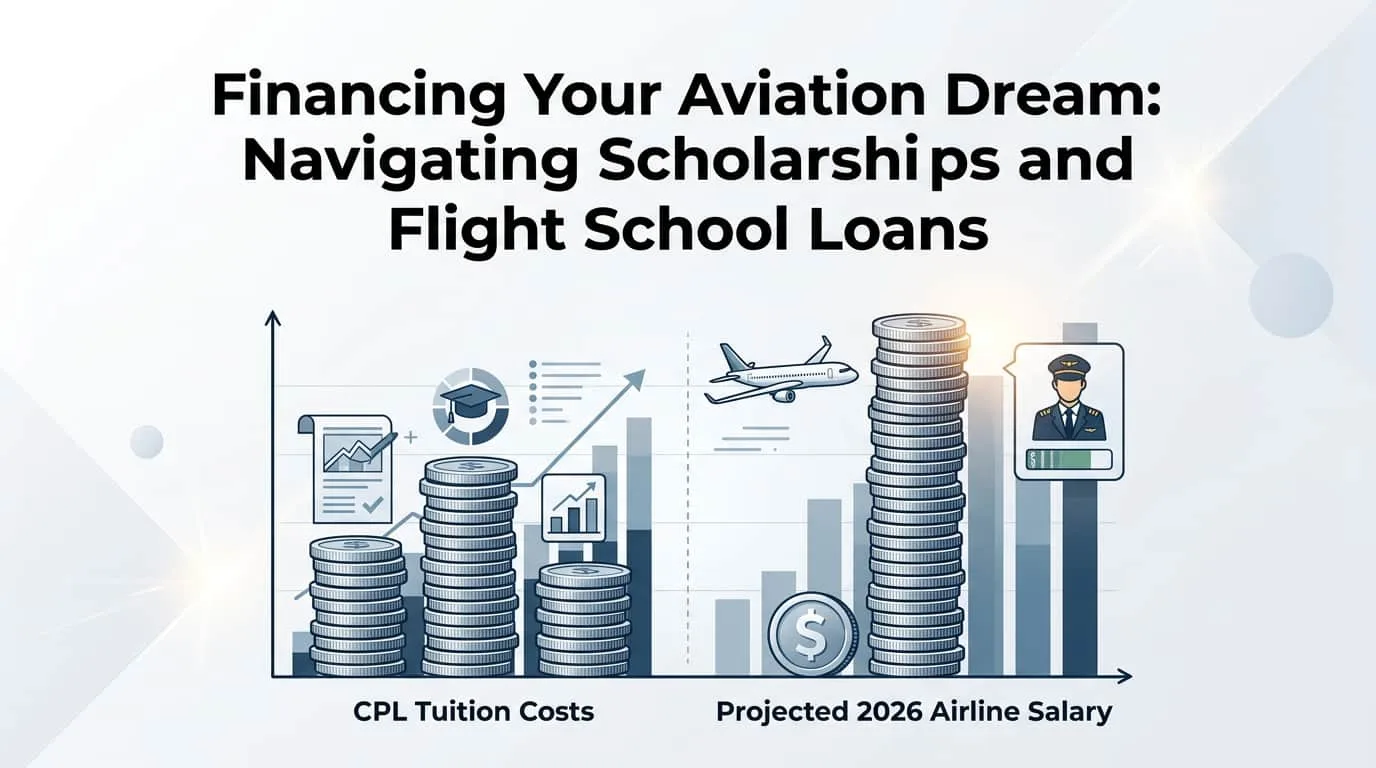
You must understand the exact numbers before borrowing money. A private pilot license costs $17,000. An instrument rating costs another $17,000. If you want to fly commercially, the full Professional Pilot Program costs $105,000. These specific numbers help you calculate exactly how much funding you need.
Comparing Your Loan Options
Federal student loans only apply to university degree programs. For independent flight academies, you will need a private student loan or a personal line of credit. Compare the interest rates and repayment terms from multiple lenders. Some banks let you defer payments while you complete your training. Always read the fine print and calculate your total repayment amount.
Alternative Ways to Fund Your Flight Training
You can fund your training through part-time work, employer sponsorships, or community support. Working while taking classes helps you pay out of pocket and avoid heavy loan interest. Many airlines also offer tuition reimbursement programs that pay back your training costs once you secure a job with them.
Employer Sponsorships
Look for employers who offer tuition assistance. Some aviation companies pay for your advanced ratings if you agree to work for them for a set number of years. This pathway guarantees you a job and covers your most expensive training blocks.
Why Choose an Accredited Flight School Nassau, Bahamas?
Choosing an accredited flight school Nassau, Bahamas ensures your training meets strict regulatory standards. Accreditation proves to airlines that you received quality instruction from certified professionals. This gives you a massive competitive edge when applying for commercial pilot jobs after graduation.
The Value of Reputable Training
Your training environment dictates your future success. Based on the students we trained last year, those who attend established academies pass their check rides faster. Our facility sits right on the second floor of Mother Gibson Plaza. We are located near the corner of Boyd Rd. and Pitt Road, making it highly accessible for residents.
We encourage you to explore Caribbean Air Academy for your aviation education. Furthermore, we offer comprehensive pilot courses designed to take you from zero experience to a fully licensed commercial pilot.
How to Build Your Aviation Financial Plan
Build your financial plan by assessing your total training costs and creating a strict monthly budget. Combine your personal savings, awarded scholarships, and private loans to cover the total amount. A clear budget prevents training delays and keeps you focused on earning your pilot ratings on schedule.
Assessing Your Goals
Write down your exact career goals. Do you want to fly for a major airline, or do you prefer working as a dispatcher? If you choose the dispatch route, our flight dispatch training costs $3,000 for an intensive 8-week program. Knowing your end goal dictates your required budget.
Creating a Training Budget
Factor in every single expense. Include the cost of flight hours, ground school materials, FAA examiner fees, and headsets. Keep a 10% buffer in your budget for unexpected weather delays or extra flight practice. A well-planned budget keeps your stress levels low while you learn to fly.
Maximizing Your Return on Investment
Maximize your aviation investment by planning your career path early and securing job placement assistance. Getting additional ratings makes you highly employable. This guarantees a faster return on your financial investment and opens doors to higher-paying commercial airline positions.
Continued Education
Never stop learning. Earning your Certified Flight Instructor (CFI) rating costs $12,000, but it allows you to get paid while building your required flight hours. Earning a multi-engine rating for $10,000 makes you attractive to corporate flight departments. Every new rating increases your earning potential.
The Bottom Line on Financing Your Dream
Paying for a flight school Nassau, Bahamas takes dedication and smart planning. You face a high barrier to entry, but the financial rewards of an aviation career easily justify the initial costs. Use scholarships to lower your burden, borrow wisely, and treat your training like a professional job.
We want to see you succeed in the cockpit. Start researching your funding options today and build a plan that works for your specific situation.
Ready to begin your aviation journey? Contact Caribbean Air Academy at (470) 309-4091 to schedule a consultation with our enrollment team.