You’ve looked up at the planes soaring over Orlando Executive Airport and thought, "I could do that." But then the practical questions hit you. How long does it actually take? Can I fit it around my job? Is it going to take years?
The short answer is: it depends on your goals. Earning a Private Pilot License (PPL) typically takes 3-6 months if you fly regularly, while becoming a professional commercial pilot can take 1-2 years.
In Central Florida, we have a unique advantage. Our weather allows us to fly almost year-round, unlike pilots up north who are grounded by snow for months. This means you can often finish your aviation training faster here than almost anywhere else in the country.
This guide breaks down exactly how long each stage takes, what factors will speed you up or slow you down, and how to plan your journey from student pilot to captain.
What Factors Change Your Training Timeline?
Three main things determine how fast you get your wings: how often you fly, the type of school you choose, and the weather.
Frequency of Lessons: This is the biggest factor. A student who flies 3-4 times a week will finish drastically faster than someone flying once a week. Flying is a muscle memory skill. If you wait seven days between lessons, you spend the first 20 minutes of your next flight relearning what you forgot. We see students who fly consistently finish near the FAA minimum hours, while "weekend warriors" often need 20-30% more time.
Part 61 vs. Part 141 Schools: These are FAA regulations. Part 141 schools follow a strict, structured syllabus and are often geared toward career pilots. They can sometimes be faster because the curriculum is rigid. Part 61 schools offer more flexibility, allowing you to train at your own pace, which can be faster or slower depending on your schedule.
Florida Weather: While we don't battle blizzards, our summer afternoon thunderstorms are like clockwork. From June through September, scheduling morning flights is the best way to keep your training on track. If you only book 3 PM slots in July, you’ll spend a lot of time watching the rain on the ramp instead of flying.
If you're looking to get into the industry quickly but aren't ready for the cockpit yet, consider flight dispatch training. These professionals are the "captains on the ground" and can be certified in just a few months.
Aviation Training Timelines by License Type
How long you spend training depends entirely on which license you want. Here is the breakdown of time and FAA requirements for each major milestone.
Private Pilot License (PPL)
Timeline: 3-6 months (flying 2-3 times per week)
FAA Minimum: 40 flight hours
Real World Average: 60-75 flight hours
This is where everyone starts. The FAA requires a minimum of 40 flight hours, but the national average is closer to 60-75 hours. In Florida, with our busy airspace and diverse weather, you learn to be a competent pilot quickly. You can fly solo in as little as 10-15 hours of instruction.
Commercial Pilot License (CPL)
Timeline: 6-12 months after PPL
FAA Minimum: 250 total flight hours
If you want to get paid to fly, you need this license. You'll build time doing cross-country flights, night flying, and mastering complex aircraft maneuvers. Many students in Central Florida build these hours by flying trips to places like Key West or the Bahamas, gaining incredible over-water experience.
Airline Transport Pilot License (ATPL)
Timeline: 2 years total (approximate)
FAA Requirement: 1,500 total flight hours
This is the PhD of flying. To captain an airliner, you need 1,500 hours. Most pilots bridge the gap between their Commercial License (250 hours) and the ATPL (1,500 hours) by working as flight instructors (CFIs). This lets you log hours while getting paid, rather than paying for them.
Choosing the Right Flight School in Florida
Picking a school is about more than just the hourly rate. You need a school that matches your learning style and schedule.
Check the aircraft availability. If a school has 100 students but only 4 planes, you will struggle to get on the schedule. Ask specifically, "What is your instructor-to-student ratio?" and "How often is the maintenance team servicing the aircraft?"
Location matters too. Training at a school near busy airspace, like near Orlando International (MCO) or near Miami, makes you comfortable with radio communications early on. However, you don't want to spend 0.5 hours of every lesson just taxiing and waiting for clearance. Schools at airports like Orlando Executive or other regional fields often offer a "sweet spot"—professional towered operations without the massive airline delays.
Look for transparent pricing on pilot courses. Avoid schools that only quote the FAA minimums, as almost no one finishes in the minimum time. Ask for a "realistic" quote based on the national average.
What Does a Training Day Look Like?
A typical day of aviation training is a mix of ground school and cockpit time.
You'll usually start with a pre-flight briefing. You and your instructor discuss the weather (checking those Florida thunderstorm forecasts!), the plan for the day, and the aircraft's maintenance status.
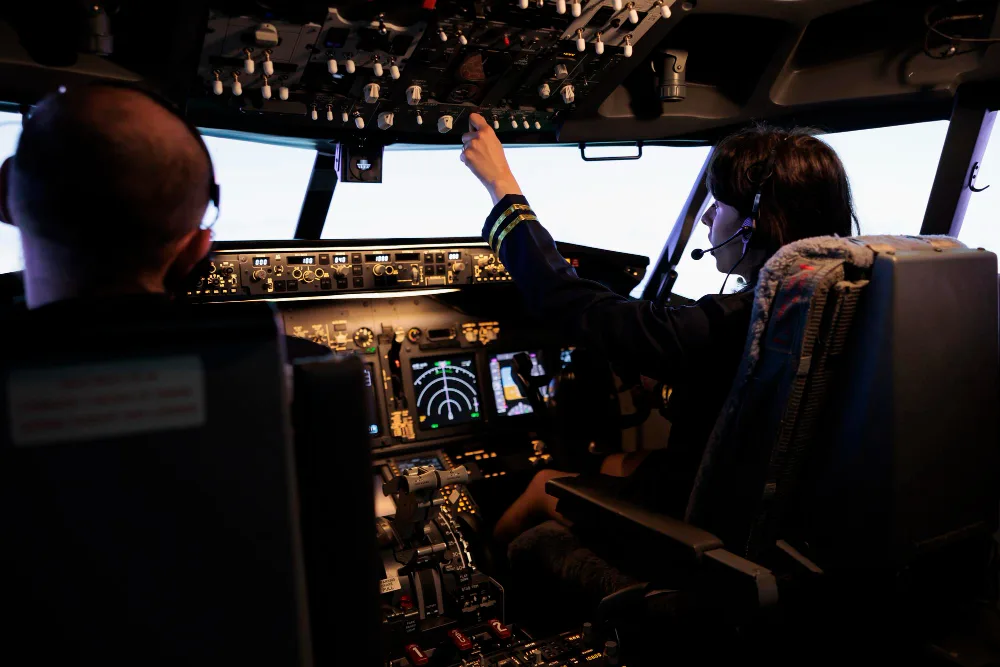
Then comes the flight. You'll head out to the plane—maybe a Cessna 172 or Piper Archer—and do your walk-around inspection. If you're flying out of a spot like Kissimmee or Sanford, you'll start your engine, talk to Ground Control, and taxi out.
The flight lesson itself is usually 1.0 to 1.5 hours. You might practice maneuvers over Lake Apopka or practice landings at a nearby non-towered field. Flying in Florida offers amazing views; you might spot shuttle launch pads or theme parks from the air.
After landing, you debrief. This is where the real learning happens. You discuss what went right, what was messy, and what to study for next time. The whole block takes about 3-4 hours.
Financial Planning for Flight Training
Aviation training is an investment. Being realistic about the costs upfront saves you from running out of funds halfway through.
Private Pilot License: Budget between $12,000 and $16,000. This covers plane rental (approx. $170-$200/hr), instructor fees ($60-$80/hr), headset, charts, and exam fees.
Commercial Training: This is a longer road that can cost an additional $35,000 to $50,000, depending on how you build your hours.
Don't let the sticker shock stop you. Financing is available. Many schools work with lenders like Sallie Mae or Meritize. Florida residents can also look into state-specific scholarships or vocational training grants.
Remember: running out of money stops your training, and restarting later costs more because you have to relearn skills. It is better to save up and train consistently than to train sporadically as paychecks come in.
Tips to Expedite Your Training
Want to finish faster and save money? Treat flight training like a job, even if it's a hobby.
- Study on the Ground: The cockpit's a terrible classroom. It's loud, hot, and expensive ($200+/hr). Learn the maneuvers and procedures at home using a "chair flying" method—literally sitting in a chair and visualizing the flight.
- Use Simulators: An hour in a certified simulator is often half the cost of an airplane and lets you hit "pause" to ask questions. It's invaluable for instrument training.
- Stay Healthy: An FAA medical certificate is required to solo. Florida heat is no joke; dehydration affects your cognitive performance. Drink water, sleep well, and show up to your lessons sharp.
- Fly Morning Shifts: As mentioned, early flights (7 AM - 11 AM) in Florida are smoother and less likely to be cancelled by storms.
Ready to Start Your Aviation Journey?
Becoming a pilot is a challenge, but the view from the office is unbeatable. Whether you want to fly for a major airline or just take your family to the Keys for lunch, the journey starts with that first lesson.
Don't wait for the "perfect" time. The sooner you start, the sooner you log those hours.
If you're in the Bahamas or looking to train in the region, Caribbean Air Academy offers top-tier instruction with experienced professionals who know exactly how to guide you through the process efficiently.
Call us today at (470) 309-4091 or contact Caribbean Air Academy to schedule your consultation and get your aviation career off the ground.